
Seabird Island is taking another important step toward building a strong and self-sufficient future. Sqéwqel Development Corporation (SqDC), the business and economic arm of Seabird Island, is excited to announce its latest economic development initiative: the Seabird Island Gravel Pit Project. This initiative will create jobs, generate long-term income for Seabird Island, and make better use of land that cannot be developed for housing or other purposes.
The project is a joint venture between SqDC and Tuya Ventures, with SqDC holding majority ownership (51%). This ensures that control, oversight, and the majority of benefits stay within the Seabird Island community.
Because this gravel pit is located within a BC Hydro Right-of-Way (ROW), a BC Hydro Compatible Use approval is required. This approval confirms that the operator, Tuya Ventures, meets BC Hydro’s standards, including proven experience in gravel operations, operating an existing gravel site, and working safely within a BC Hydro ROW, and meeting engineering requirements.
This approval has now been granted.
Using Our Land Wisely
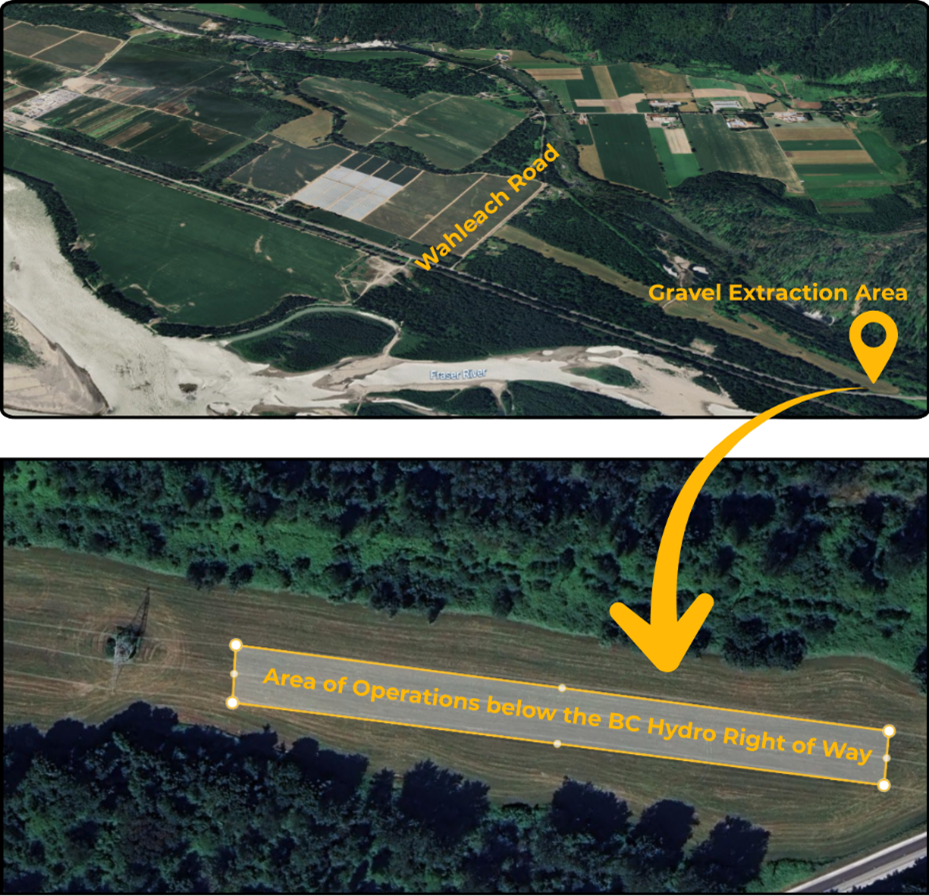
The gravel pit will be located under the BC Hydro transmission lines at the far east end of Seabird Island, about 1.5 kilometers from the nearest home on Wahleach Road. This area is part of the BC Hydro right-of-way, which means it cannot be used for housing or other development. Instead, SqDC is utilizing this land responsibly and productively by transforming unused space into a new source of community benefit and economic growth.
A Project That Supports Seabird’s Vision
The Seabird Island Gravel Pit Project supports the Nation’s long-term goal of economic independence and self-sufficiency. SqDC’s mission is to grow Seabird Island’s economy, create employment, and bring in new revenue streams that reduce reliance on outside sources.
“Every dollar we generate through this project goes back into our community,” said Nigel Selvadurai, CEO at SqDC. “It supports programs, creates jobs, and strengthens Seabird’s ability to make its own decisions about its land and resources.”
Jobs, Training, and Long-Term Benefits
Once operations begin, the project is expected to create steady employment for 20–25 Seabird Island families. They will have the opportunity to gain hands-on training in equipment operation, environmental monitoring, and site restoration, skills that are valuable for future community projects.
The project will also bring in several forms of income for Seabird Island:
These combined revenues will help fund community growth, housing, infrastructure, and other development priorities over the next decade.
Protecting the Land and Environment
Environmental care is at the heart of the project’s design. All operations will follow Indigenous Services Canada (ISC) environmental standards and Seabird Island’s Land Code, with oversight from SqDC and the Seabird Lands Department.
Strict measures are in place to manage dust, noise, and erosion, and each section of the site will be graded, restored, and replanted with native plants once work is complete. Environmental engineers will monitor the site to ensure that the land, air, and water are protected throughout the process.
This approach ensures that Seabird’s natural environment is cared for, not just during operations, but long after the project is complete.
Project Timeline
Work on the Seabird Island Gravel Pit Project will begin once final approvals are complete, with operations expected to start this season. Phase 1 will run for approximately three years in one defined area under the BC Hydro right-of-way. Once this phase is complete, the land will be restored and replanted, and SqDC will review the results before considering any future work.
This phased approach allows the project to move forward responsibly and with full accountability.
Community-Led, Community-Benefiting
This is not an outside project, it is Seabird Island’s project, led by Sqéwqel Development Corporation (SqDC) and guided by Seabird’s values, laws, and commitment to future generations.
By creating local jobs, building skills, and generating new income for community programs, this project helps Seabird Island continue moving toward economic strength, independence, and sustainability.
“This project reflects who we are; strong, capable, and guided by respect for our land and people,” said Nigel. “We’re not just digging gravel; we’re building a future for Seabird Island.”
Have Questions?
Contact us at info@sqewqel.ca or 604-769-6815
We'd love to hear from you. Feel free to fill out the form, email or give us a call to book a meeting with us.